Building an intuitive platform for sesonal and stressed users.
The Roombook is part of a larger platform that helps commercial cleaning companies automate resource estimation and track field workers in real-time. My focus was bridging back-office modeling with on-site reality.
Challenge
The Assumption
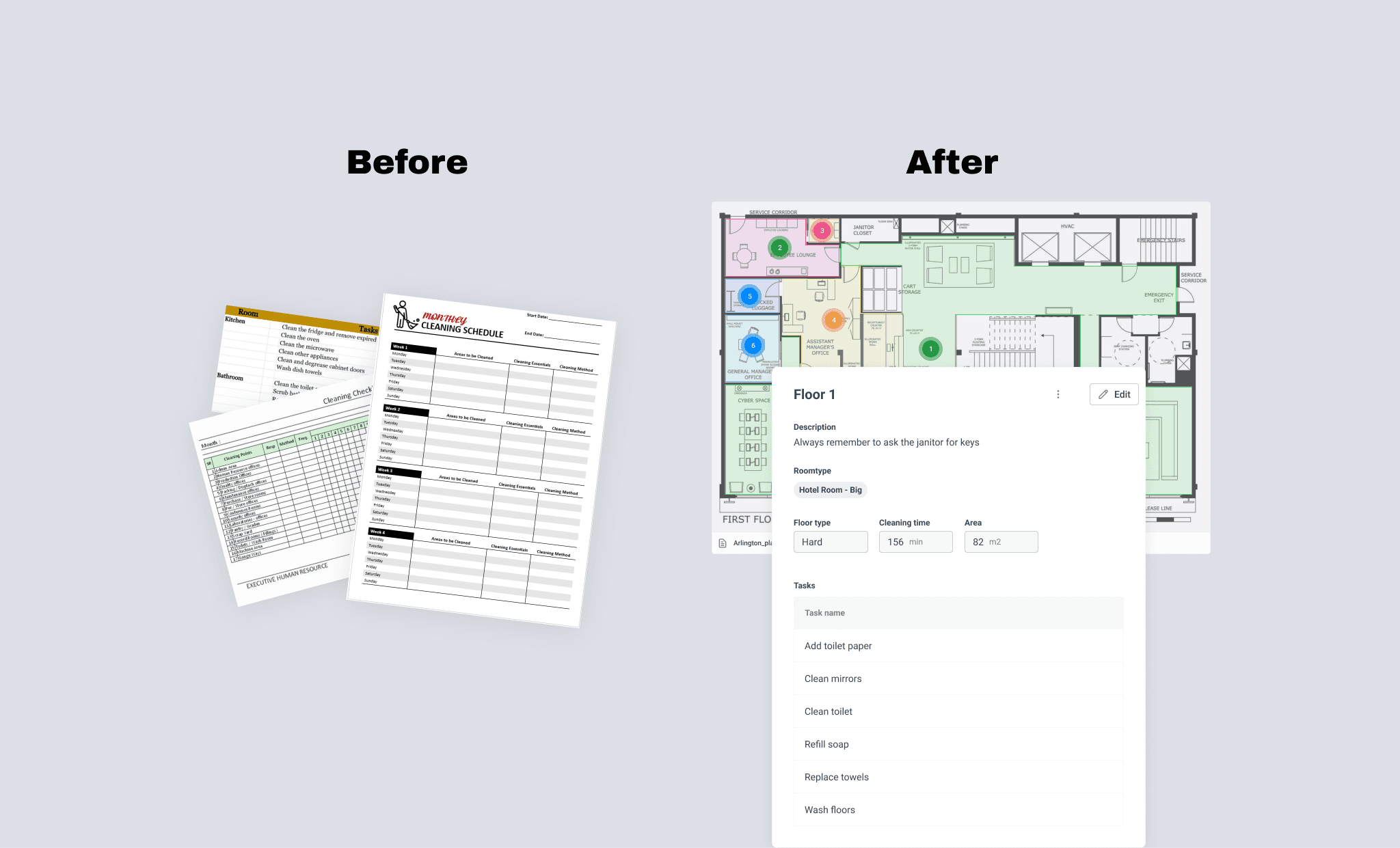
When we started building the Roombook, the team assumed our job was simply to digitize the industry standard: a printed Excel spreadsheet. The mental model was linear. You go to Room A, clean it, and check a box. Then you move to Room B.
The Reality Check
I led a research team to shadow cleaners in large office buildings. We quickly realized the linear checklist model was broken for three main reasons:
‣ Spatial Confusion: Cleaners got lost in complex buildings.
‣ Workflow Interruption: If a room was occupied, the list broke. Cleaners would skip it and often forget to return.
‣ Tool Ambiguity: Cleaners didn't know which specific equipment was needed until they were standing in the room.
The Insight
Cleaning is a spatial and adaptive workflow, not a linear one. Digitizing a spreadsheet would just preserve existing inefficiencies.
Approach
The Internal Conflict
We had a tough internal debate. Engineering and Product were concerned about the development costs of building an intelligent system compared to a basic manual input form.
The Strategic Decision
I argued that porting manual entry to a screen added zero business value. It just made the "busy work" digital. To make the product viable, we had to move the burden of complexity from the user to the software. We shifted the strategy from data entry to intelligent automation.
Solution
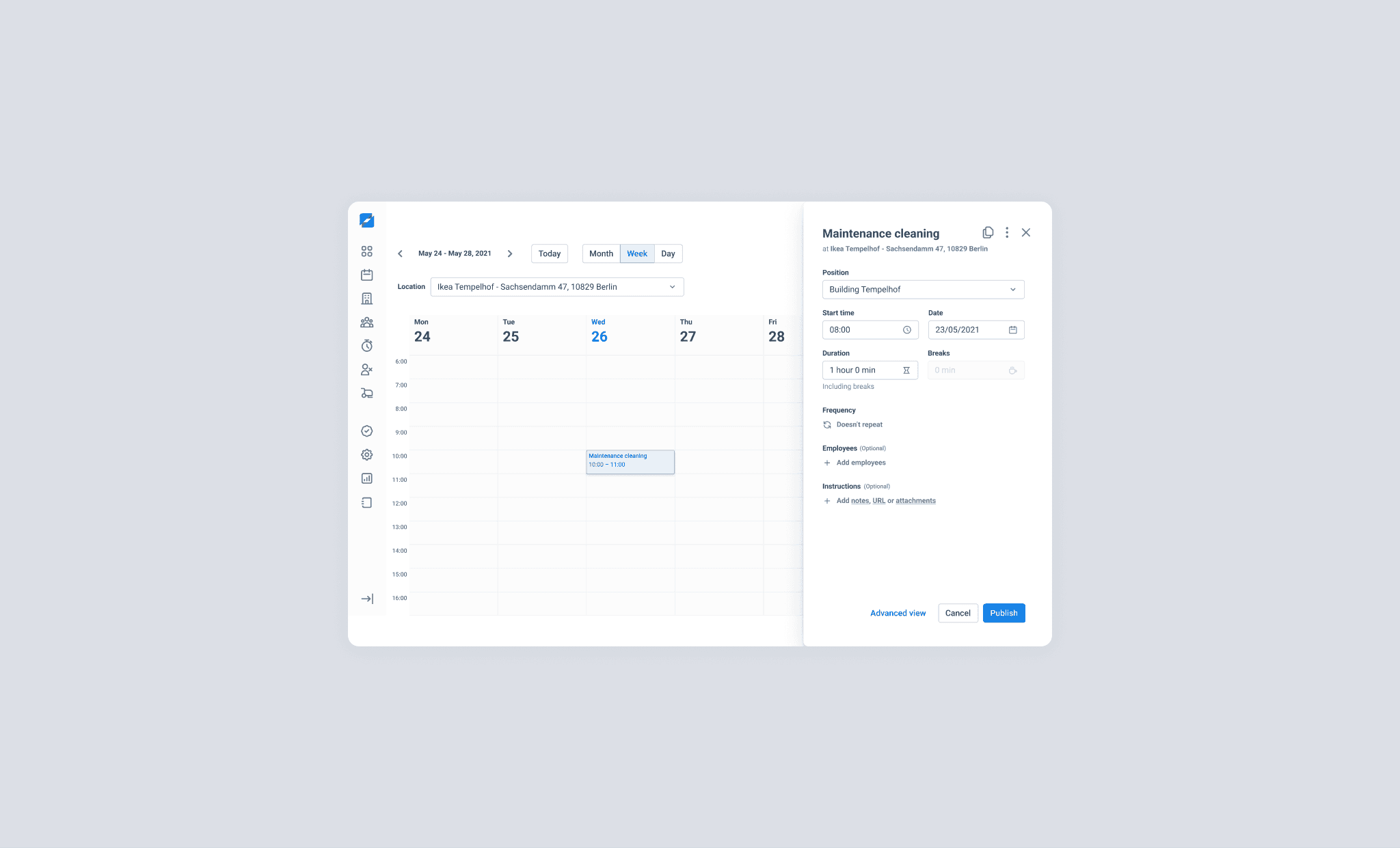
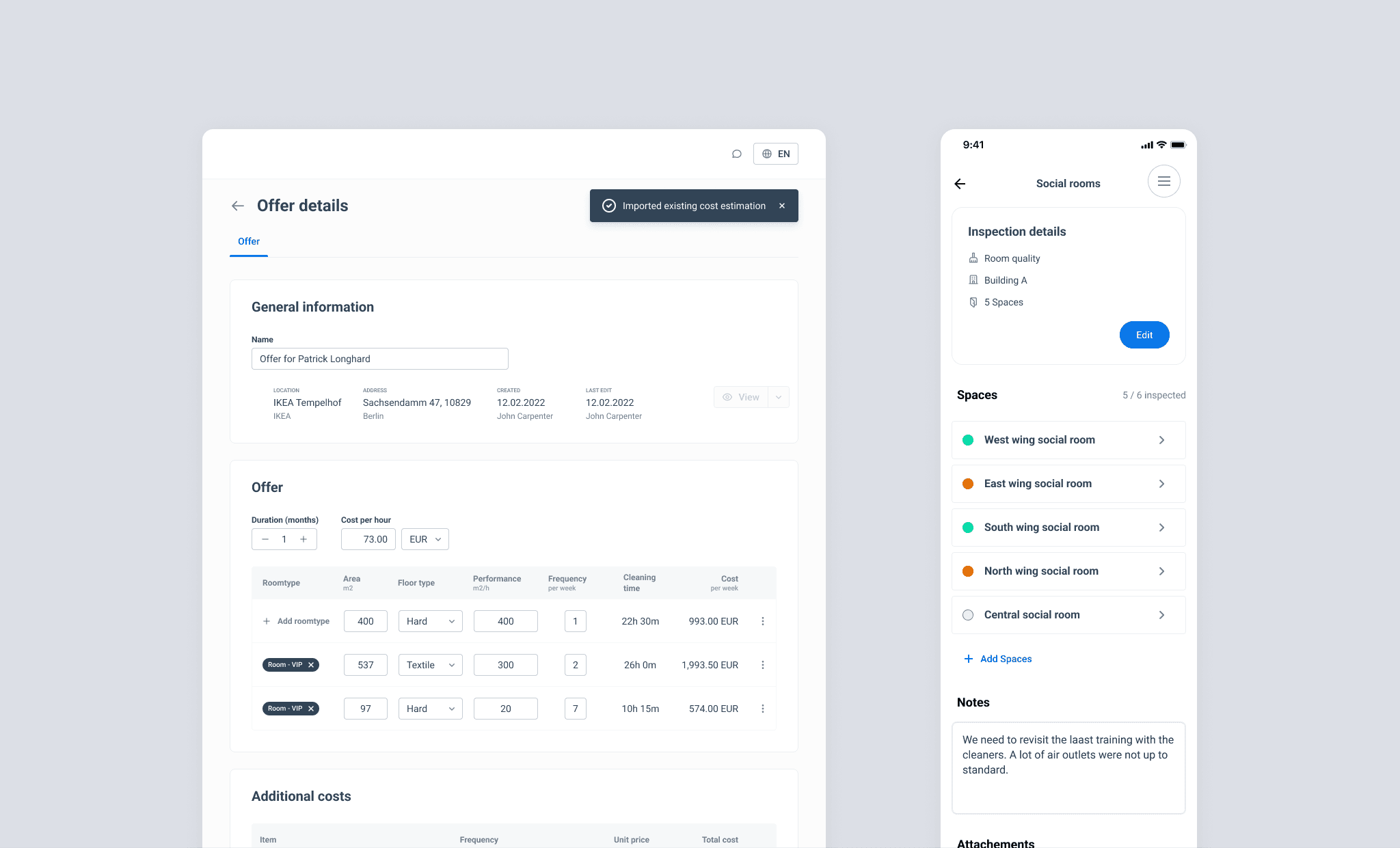
I redesigned the Roombook to act as a navigation system for cleaners and a resource calculator for planners.
Intelligent Floorplans
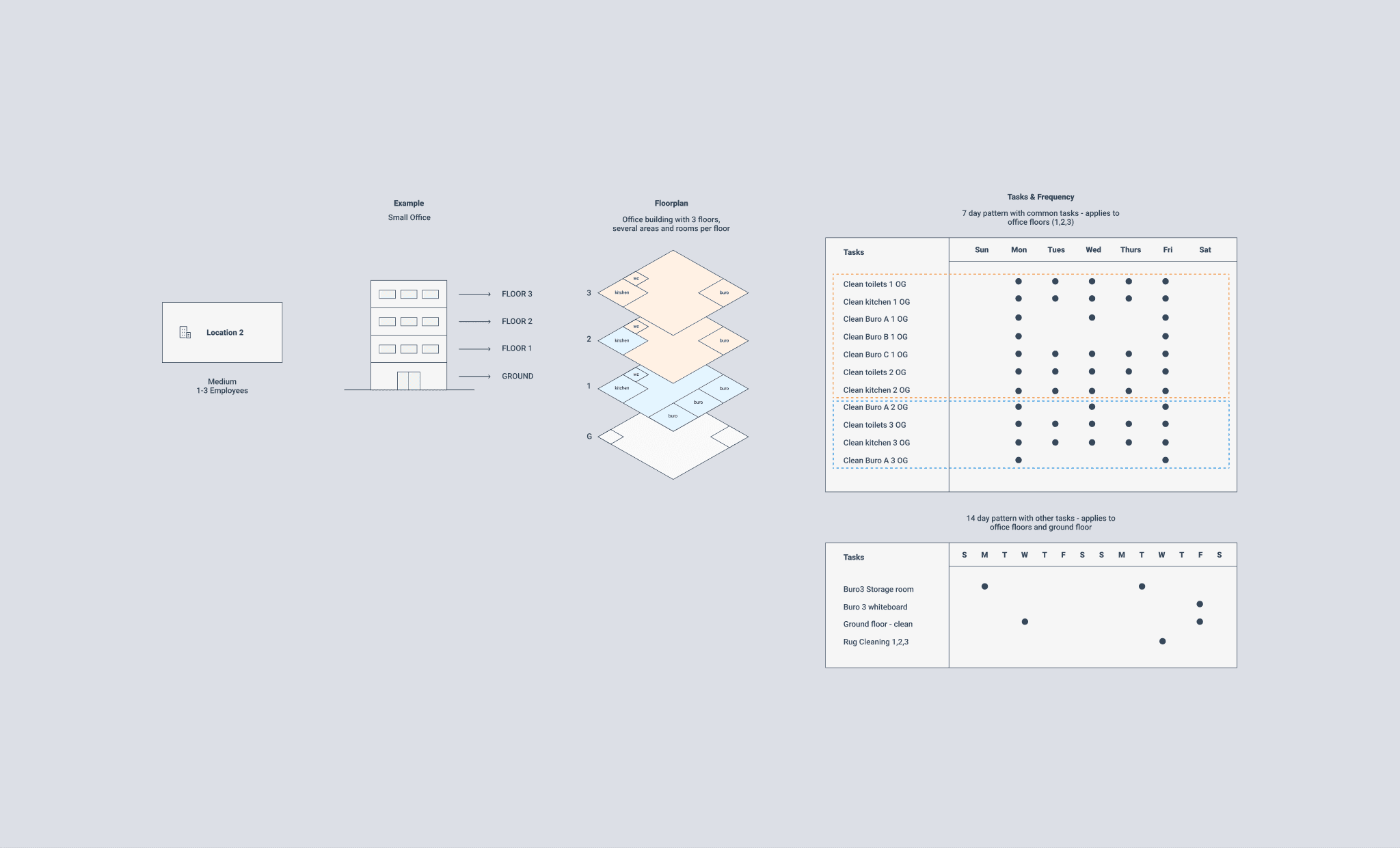
Instead of manual rows and columns, the system now ingests raw floorplans. It identifies rooms, suggests cleaning types based on the area (like carpet vs. hard floor), and calculates time and material requirements automatically.
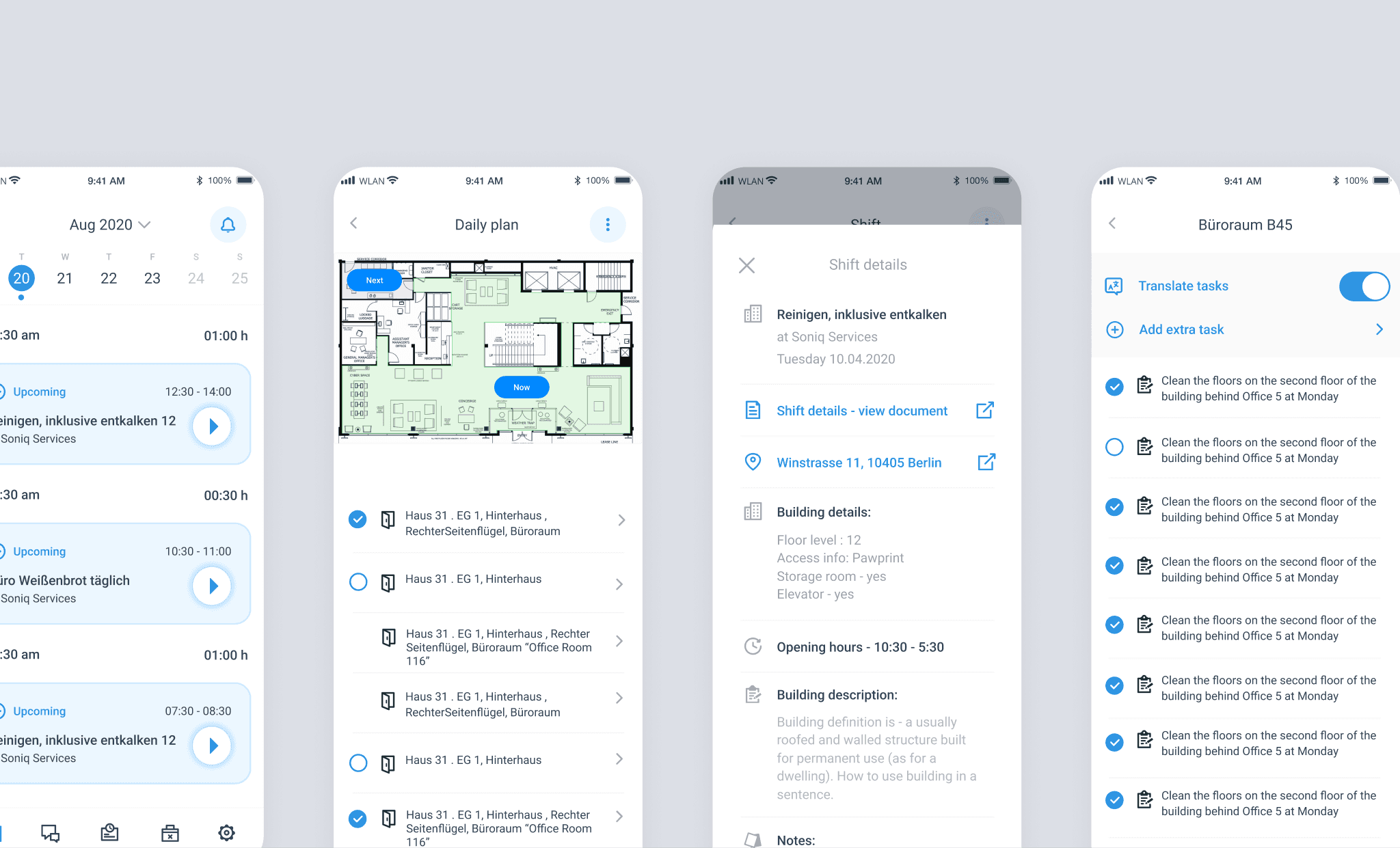
Spatial Guidance
We replaced the checklist with a map-based mobile interface. The app guides the cleaner through the building and includes a "Recovery" flow. If a room is occupied, the system queues it for a later loop so nothing gets missed.
Impact
The Business Risk
The most critical output of this system is the Contract Update. The data is used to renegotiate prices with clients. For example, it can prove a building takes 20 percent longer to clean than initially estimated.
The Constraint
Because money and trust are on the line, the data had to be solid. We cross-referenced time-on-site data with cleaner input. This gave managers the confidence they needed to take those numbers to a negotiation table.
By moving away from the paper-checklist mental model, we delivered a system that cut administrative hours through automation, reduced missed rooms in the field, and gave sales teams the evidence needed to fix undervalued contracts.