IoT wearable and app for dog owners
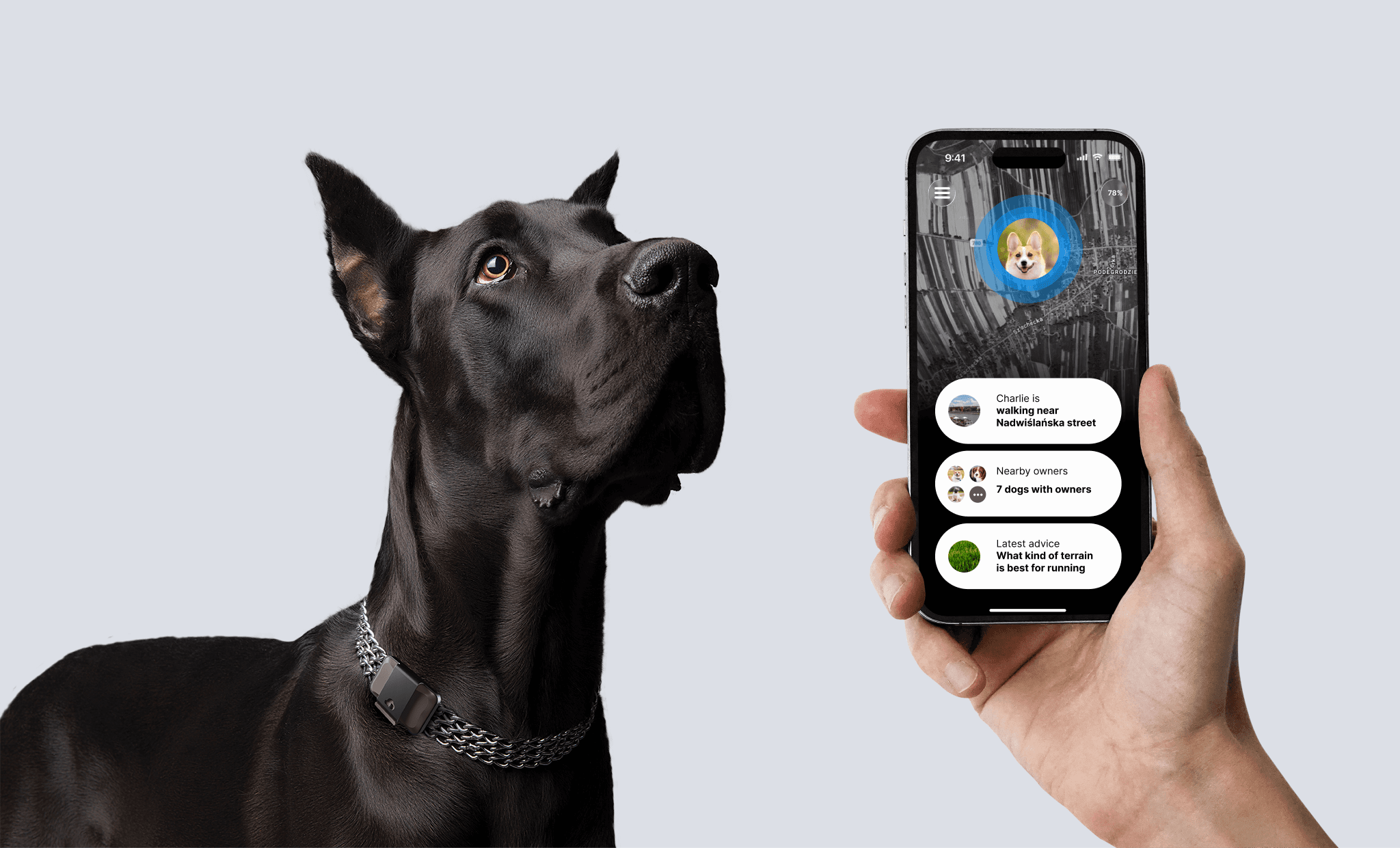
Tail is an IoT ecosystem consisting of a wearable collar clip and a mobile app designed to bridge the communication gap between dogs and their owners.
As Head of Design and co-founder, I led the product roadmap and user experience, transforming raw data from GPS, accelerometers, and thermometers into actionable, AI-driven advice for pet parents.
Challange
The Assumption
The initial market assumption for pet wearables was that "tracking" was the primary goal. However, our research indicated that while security is important, the deeper emotional need for owners is a sense of confidence and peace. They didn't just want to know *where* their dog was; they wanted to know *how* their dog was doing.
The Insight
Through interviews and studies with over 450 participants, we identified three key personas: The Student, The Professional, and The Parent. Each had a different "anxiety point." For example, the "Parent" persona was less worried about the dog getting lost and more worried about whether their children were properly exercising the pet or if the dog was healthy during their long work hours.
Approach
The SOS and Connectivity Trade-off
A major challenge was managing battery life versus real-time tracking. Constant GPS pings drain the battery, but users need immediate updates if a dog escapes.
The Solution:
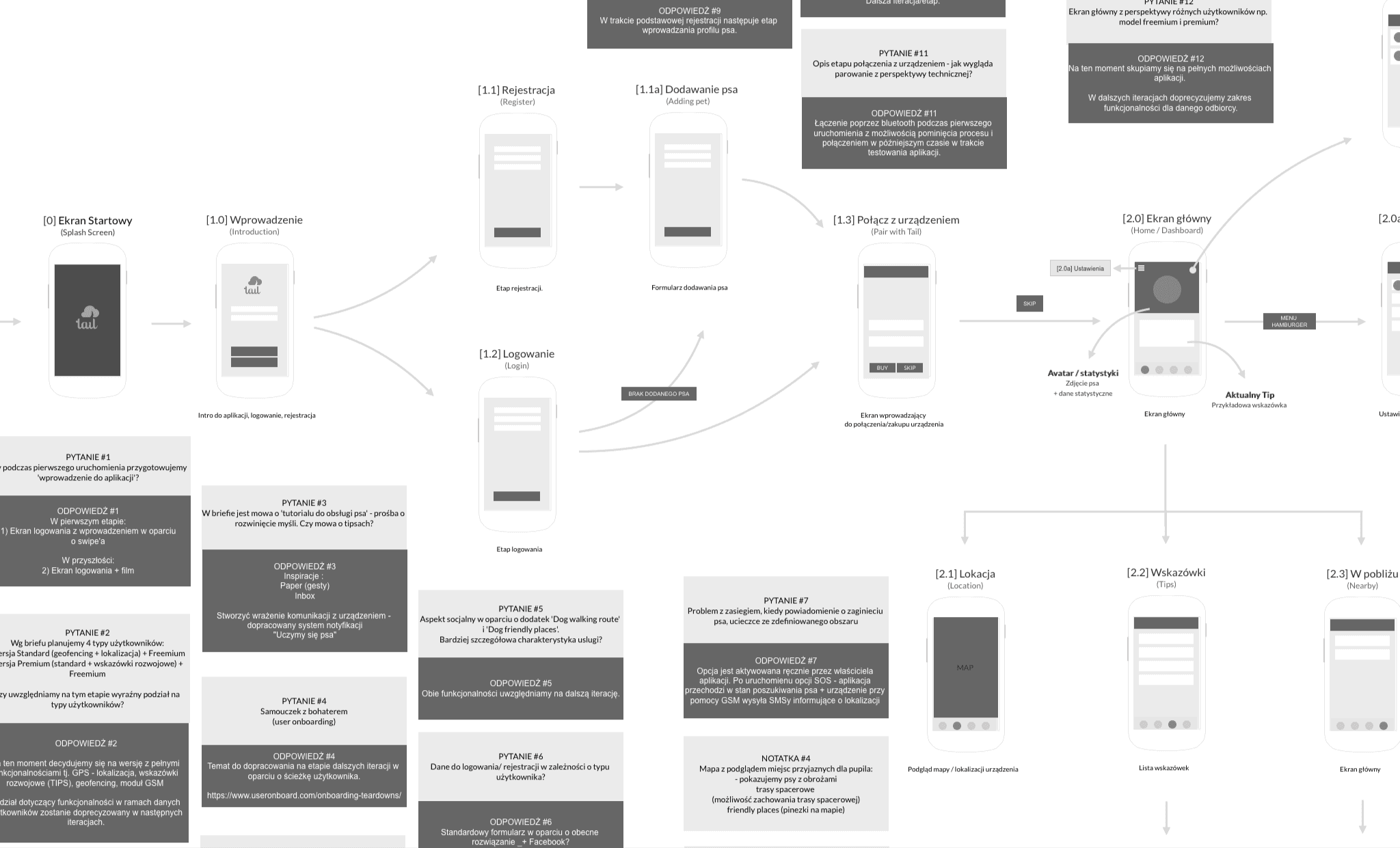
We designed a manual "SOS Mode." The device stays in a low-power state until the owner triggers the search in the app. Only then does the device switch to high-frequency GSM/GPS reporting to locate the pet.
Safety Features:
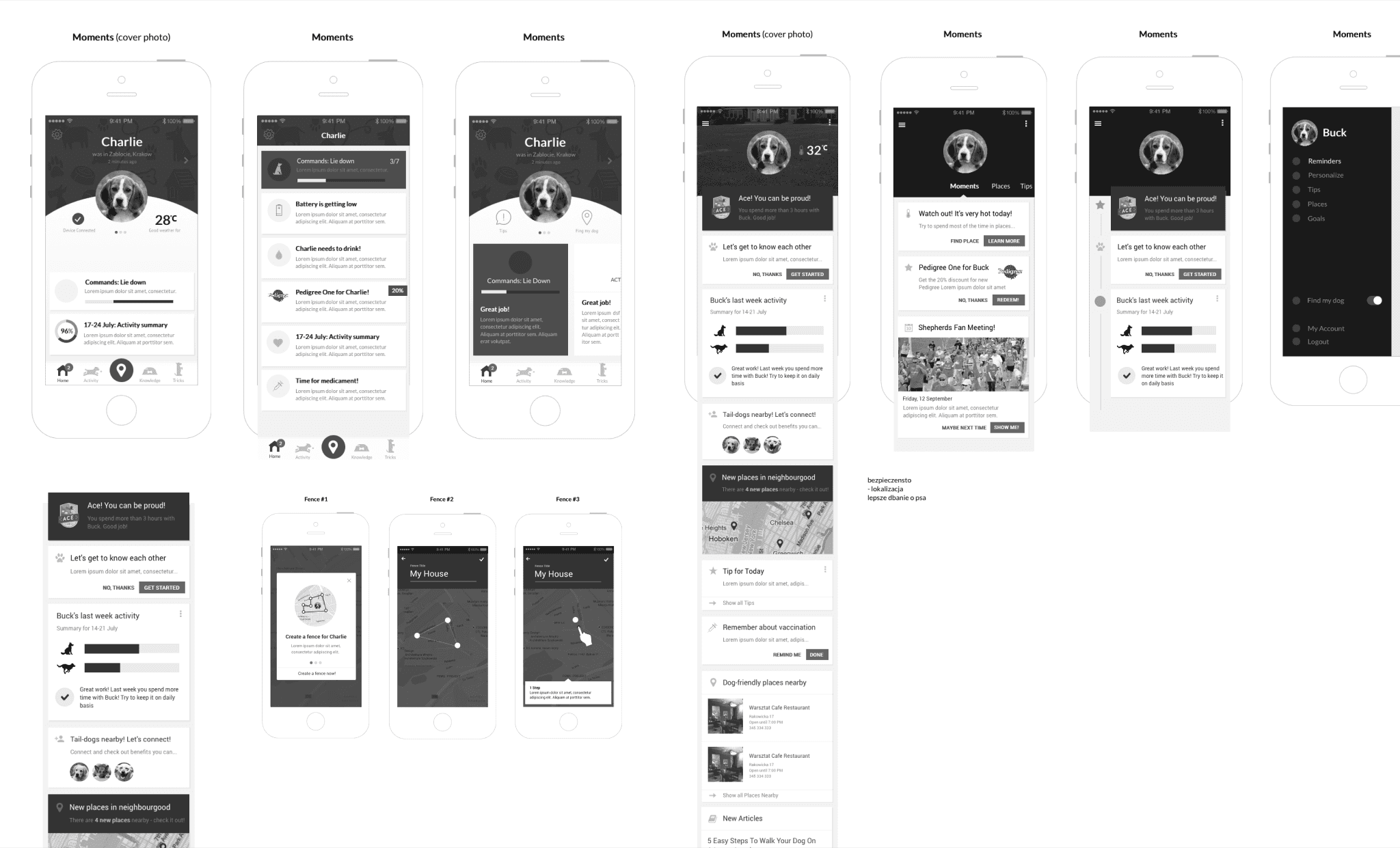
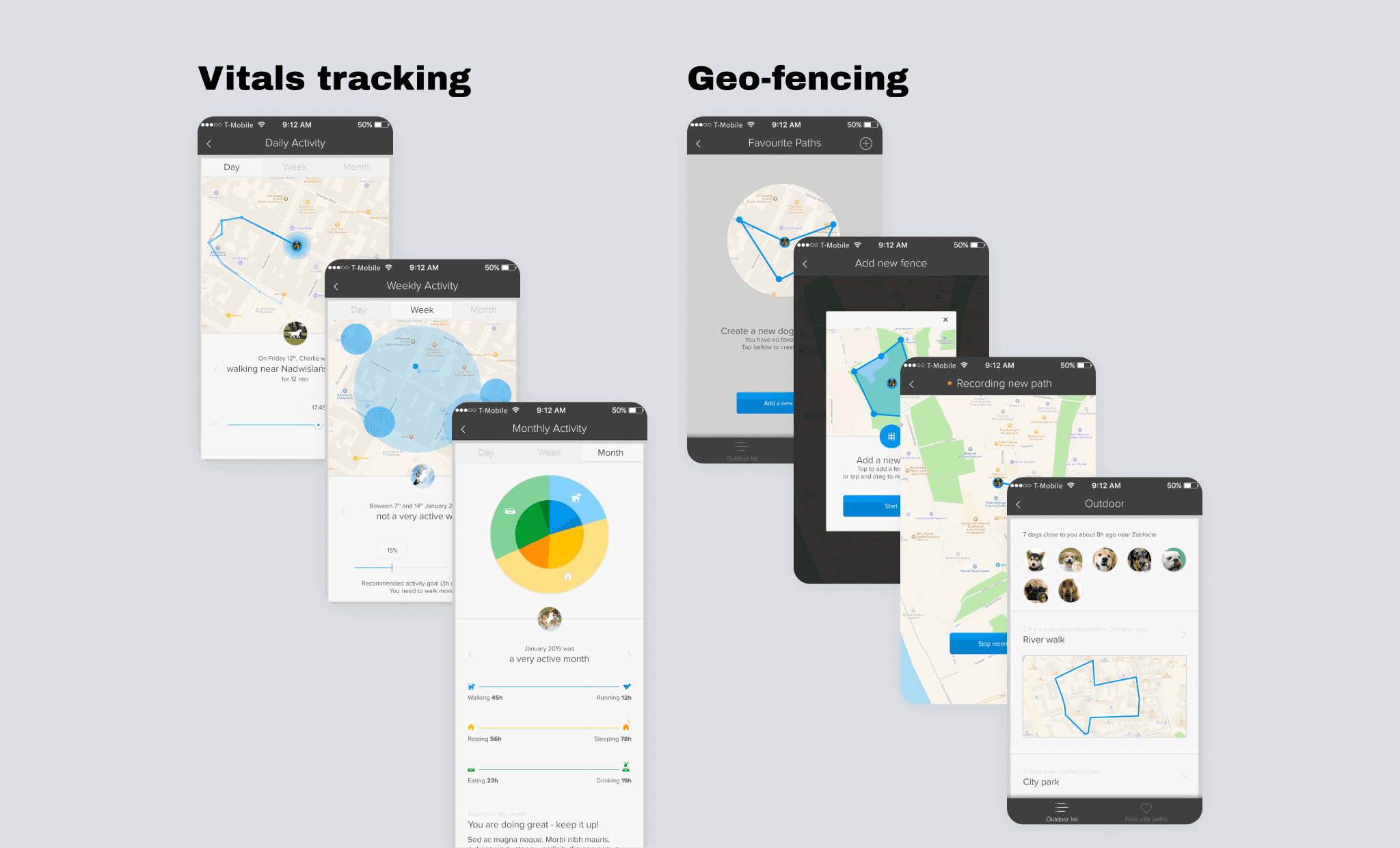
We implemented "Geofencing"—a virtual leash that pings the owner the moment the dog crosses a defined boundary.
Bridging Design and Engineering
As a founder, I had to align our scientific partners (AGH University for AI and University of Wrocław for behaviorism) with the user experience. This involved:
Iterative Testing:
Using high-fidelity interactive prototypes to run scenario-based tests (e.g., "How many users can successfully set a Geofence while walking their dog?").
Business Integration:
Ensuring premium features were visible but not intrusive, supporting our subscription-based revenue model with partners like T-Mobile.
Solution
The StrategyWe moved away from presenting raw "Big Data" and instead used AI to create a "voice" for the dog.
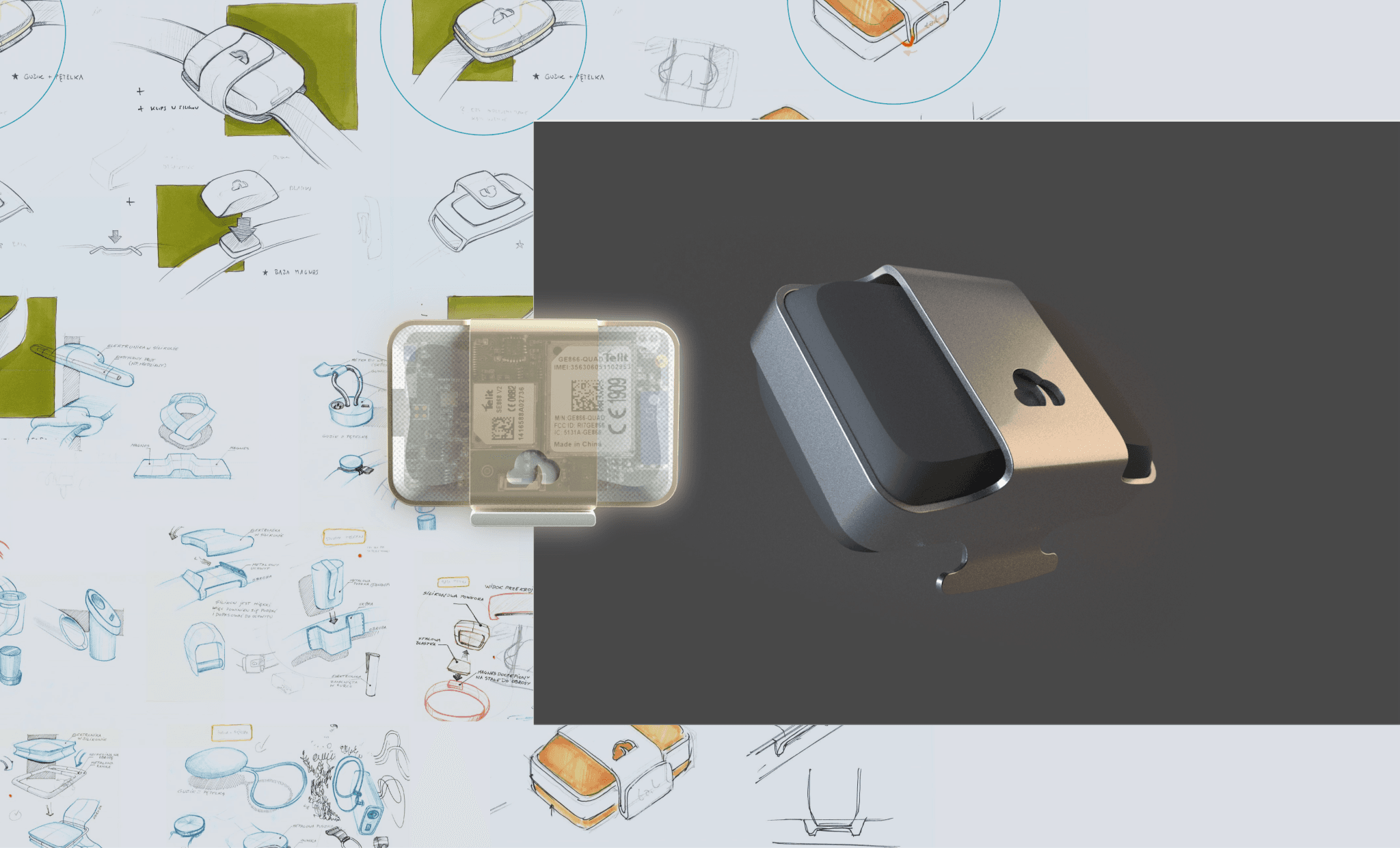
The Wearable: A 35g device equipped with GPS, GSM, and an accelerometer to track eight different types of activity.
The App: Instead of showing a list of steps, the app uses direct, common language to deliver advice. For instance, instead of "Ambient temperature is 30°C," the app might say, *"Hey! How about we go inside and chill for a bit? It's pretty warm outside"*.
Key Design Principle: One Task, One ScreenRecognizing that dog owners are often distracted during walks, I implemented a "one task, one screen" philosophy to ensure the UI remained readable and functional even in high-stimulation environments.
Impact
Tail successfully moved the needle from a "tracking gadget" to a "health and happiness platform." By focusing on HCD (Human-Centered Design) guidelines throughout the process, we built a product that didn't just provide data, but fostered a better relationship between humans and their pets.